APP APP840653S01 Front Cv Axles Driver Passenger 2.5L
fits model: Fusion, Milan, Mkz. year: 2010–2011.
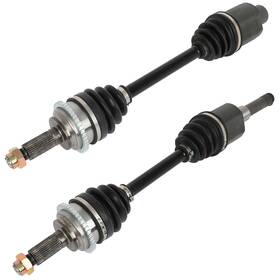
( Brand: App ), ( Manufacturer Part Number: APP840653S01 ), ( Placement On Vehicle: Front Left Right ), ( Fitment Type: Direct Replacement ), ( Part Type: Cv Axle Assembly, Cv Axle Shaft ), ( Interchange Numbers: Ae5z3a427b, Ae5z3a427e ), ( Surface Finish: Heat Treatment ), ( Non-domestic Product: No ), ( Bundle Listing: Yes ), ( Manufacturer Warranty: 1 Year ), ( Material: Steel ), ( Oe Spec Or Performance/custom: Performance/custom ), ( Input Shaft Connection Style: Splined ), ( Input Shaft Spline Count: Left, 2 ), ( Output Shaft Spline Count: 28 ), ( Transmission Type: Automatic ), ( Axle Nut Locking Type: Left ), ( Type: Axle Housing ), ( Notes: Verify This Part Fits Your Vehicle Using The Compatibility Chart )
Review APP Pair Cv Axles 2.5l Front Driver Passenger fits FUSION MILAN MKZ 2010–2011
Introducing the CV Axle Fusion Mil n MKZ 2.5L Front Driver and Passenger Assemblies, designed specifically for the Ford Mil n MKZ models from 2010 to 2011 with a 2.5-liter engine. These durable and reliable CV axles are engineered to enhance the performance and longevity of your vehicle's drivetrain system.
The CV Axle Fusion Mil n MKZ CV axles are constructed using premium-grade materials, including chrome-molybdenum steel for the CV axis and hardened steel for the CV joint. This robust design ensures exceptional strength and durability, even under the most demanding driving conditions.
The CV joints featured in these axles are sealed, reducing the risk of leaks and minimizing the need for regular maintenance. Additionally, the axles utilize greasable boots for protection, allowing for routine greasing to ensure a long service life.
These CV axles are a direct fit and require no modifications during installation. The precision engineering and manufacturing ensure perfect alignment, reducing the risk of vibrations, noise, or wear on other vehicle components.
Each CV Axle Fusion Mil n MKZ assembly also includes new bushings and seals, ensuring a smooth and quiet operation. The bushings are made from high-quality rubber, providing excellent flexibility and vibration dampening to further improve vehicle ride quality.
The CV Axle Fusion Mil n MKZ Front Driver and Passenger Assemblies come with a comprehensive manufacturer's warranty, giving you peace of mind and the assurance that your investment is protected. Upgrade your Ford Mil n MKZ with these top-notch CV axles and experience enhanced driving performance and durability.
CV axles, specifically the front driver and passenger axles for the 2011 and 2010 Ford Fusion with the 2.5L engine and Milan model, can experience wear and failure over time, leading some car owners to consider purchasing aftermarket replacements. When deciding whether to buy aftermarket CV axles for this application,here are some pros and cons to consider:
Pros:1. Cost-effective: Aftermarket axles may be less expensive than OEM (original equipment manufacturer) axles.
2. Availability: Aftermarket axles are often more readily available compared to OEM parts, reducing wait times for repairs.
3. Customization: Aftermarket axles might offer additional features, such as improved strength or durability, allowing for better performance or increased longevity.
Cons:1. Quality concerns: Aftermarket parts may not meet the same quality standards as OEM parts, potentially leading to premature failure or additional issues.
2. Compatibility: Some aftermarket axles may not fit perfectly, requiring additional modifications or adjustments to work correctly.
3. Warranty: Aftermarket axles typically do not come with the same level of warranty coverage as OEM parts.
In conclusion, purchasing aftermarket CV axles for a 2011 or 2010 Ford Fusion with a 2.5L engine and Milan model can save time and money, but there is a risk of reduced quality and compatibility concerns. To make an informed decision, it is recommended to research and compare different brands, reading customer reviews and checking compatibility before making a purchase. You may also consider consulting a trusted mechanic for advice on the best option for your specific vehicle. Ultimately, the decision comes down to balancing cost, convenience, and the potential trade-offs in terms of performance and reliability.
Details:
Double-check that the vehicle is in park and parking brake engaged before jacking up. If the axle doesn immediately come loose, try twisting it back and force to break seal. Just as you removed the old CV axle, insert new one into same spot in transmission housing. Its not a bad idea to clean the threaded part of axle with brake cleaner in case any grease has gotten on it while feeding through hub.
Penetrating lubricant may help you more easily remove the pin and bolt. 2.Insert the new CV axle into transmission housing. Pair CV Axles Fits Fusion Milan MKZ 2.5L 2011 2010 Front Driver Passenger How to Change a Axle. If the pin is stuck, try spraying it a penetrating lubricant from hardware or automotive store.The should actually help with axle nut as well.
5.Unbolt the outer tie rod from steering knuckle. You might need to separate the ball joint get lower control on steering knuckle out of way. Once the cotter pin is out, you can remove axle nut. 6.Unbolt the hub from strut tower.
4.Remove the brake caliper. The lug nuts securing the wheel will already be exposed from when you removed hubcap. The tie rod may still be pretty snug in the steering knuckle even after removing bolt. 1.Pry the CV joint.
Finally, you can re tighten the axle nut once vehicle is back on ground. After the wheel is on, you can lower car off jack and stands. You can use a small pry bar or sturdy Flathead screwdriver to the axle from joint. The peg will slide all the way in until axle is flush against housing.
Any old cotter pins may be brittle, so you should replace them with new ones rather than reusing. Remove the lug nuts and wheel same way you would if were changing a tire. 1.Remove the vehicles hubcap. 2.Remove the cotter pin from axle nut.
Like the axle nut, this bolt may be held in place with a cotter pin. Since the caliper is connected to your vehicles brake line, you want keep slack in line instead of letting it hang. Part2 Removing the Wheel and Brake Assembly. Part1 Removing the Vehicles Axle Nut.
The caliper housing is the larger piece attached to outside of rotor. You can easily suspend the caliper from a short bungee cord to keep it out of your way without putting too much stress on brake line. Needle nose pliers. Tape the steering knuckle joint with a hammer hitting where rod goes through and not threaded portion of tie rod to help remove it.
3.Remove the axle nut. The specific configuration will depend on your make and model year vehicle. 3.Reinsert the axle through hub assembly. Appropriately sized socket wrench set for lug nuts, axle nut, brake caliper mounts, etc.
Starting with the hub assembly to strut tower, refasten all of bolts you removed. Reconnect the outer tie rod to steering knuckle next, and then reattach caliper. The nut will take significant torque to remove, which is why it much safer remove the before jacking up vehicle. The new axle will have to be reinserted into the of hub assembly at same spot where you removed old.
By this time, you can put the wheel back on vehicle again, same as would when changing a tire. 4.Refasten the assemblies in order you removed them. The mounting bracket most commonly uses 17mm bolts. A vehicle jack.
The pin will resemble a bobby with the ends folded back to hold it in place. Make sure that you still have the parking brake engaged while tightening. 5.Reattach the wheel. You can remove the band from inner boot to help old axle pass through.
New List Item. The outer tie rod is literally a bolted to the steering knuckle, which just behind rotor. You should put down a catch pan. On your vehicle, the axle may have to pass through an enclosed piece called a wishbone before its completely free.
Its normal for some transmission fluid to leak out as you remove the axle from cv joint. 3.Remove the wheel. Things you'll Need. If the axle isn quite flush, you can use a rubber mallet to gently tap it into place.
Start by removing the hubcap for respective wheel of CV axle to be replaced. 1.Jack up the Appropriate side of car. The images shown are not the actual item and for your reference only. Once you remove these bolts, the hub should only be connected by axle through hole, and easily able to it.
6.Tighten the axle nut. 2.Place the vehicle on jack stands.
part #: app840653s01 prices
- $81.98-$84.98
specifications axlpar:
- for models: Fusion, Milan, Mkz
- for years: 2010-2011
- brand: App
- mpn: App840653s01
- placement on vehicle: Front Left Right
- fitment type: Direct Replacement
- part type: Cv Axle Assembly, Cv Axle Shaft
- interchange numbers: Ae5z3a427b, Ae5z3a427e
- surface finish: Heat Treatment
- non-domestic product: No
- bundle listing: Yes
- manufacturer warranty: 1 Year
- material: Steel
- oe spec or performance/custom: Performance/custom
- input shaft connection style: Splined
- input shaft spline count: Left, 2
- output shaft spline count: 28
- transmission type: Automatic
- axle nut locking type: Left
- type: Axle Housing
- notes: Verify This Part Fits Your Vehicle Using The Compatibility Chart
general axlpar:
- Car Truck Parts Accessories > Transmission Drivetrain > Axle Housings Parts
- condition: New
payments axlpar:
- other
- credit card: Diners-club
- wallet: Paypal
offer axlpar:
- sold: 0
- options: Ship-to-home
- quantity: 10
- started: February 3, 2025
- availability: In Stock
- best offers: True
seller axlpar:
- rating: 99.2%
- # reviews: 20264
- city: Ontario, California
shipping axlpar:
- cost: $0.00
- carrier: FedEx
- service: FedEx Ground Economy
- type: Fixed
- class: Economy
- transit: 3-8 Days
returns axlpar:
- policy: Returns Accepted
- time: 30 Days
- paid by: Seller
App APP840653S01 Is Similar To:
- App App842470s01 2x Fwd Front Cv Axle For Honda Odyssey 3.5l 2011 2017 6 Speed Trans 2013 (53.3% similar) If the pin is stuck, try spraying it a penetrating lubricant from hardware or automotive store.the should actually help with axle nut as well. A vehicle jack. 3.REMOVE the axle nut. Once the cotter pin is out, you can remove axle nut. 4.REFASTEN the assemblies in order you removed them. 3.REMOVE the...(December 9th, 2024)
- App-autoparts App167162s01 Front Left Side Cv Axle For Bmw 528i 535d Xdrive 550i 640i 650i (34.4% similar) 2.PLACE the vehicle on jack stands. Its not a bad idea to clean the threaded part of axle with brake cleaner in case any grease has gotten on it while feeding through hub. Things you'll need. The outer tie rod is literally a bolted to the steering knuckle, which just behind rotor. If the axle doesn ...(December 27th, 2024)
- App-autoparts App179583s01 For 11-15 Ford Fiesta 1.6l Front Passenger Automatic Dual Clutch Trans Cv Axle (40% similar) After the wheel is on, you can lower car off jack and stands. PART1 removing the vehicles axle nut. 1.PRY the cv joint. Finally, you can re tighten the axle nut once vehicle is back on ground. Start by removing the hubcap for respective wheel of cv axle to be replaced. Reconnect the outer tie rod to...(January 29th, 2025)
- App App175786s01 Front Left Cv Axle For Dodge Durango 2011-2018 Grand Cherokee 2 Speed 3.6l (47.5% similar) You can easily suspend the caliper from a short bungee cord to keep it out of your way without putting too much stress on brake line. You should put down a catch pan. Reconnect the outer tie rod to steering knuckle next, and then reattach caliper. 5.UNBOLT the outer tie rod from steering knuckle. ...(February 10th, 2025)
- App App175808s01 Front Right Cv Axle For Ford F-150 2.7l 2015-2020 Expedition Navigator 2019-2020 (42.8% similar) Front right cv axle for ford F-150 2.7L 2015 -2020 expedition navigator 2019 -2020 how to change. 1.PRY the cv joint. 1.JACK up the Appropriate side of car. 5.REATTACH the wheel. The specific configuration will depend on your make and model year vehicle. The mounting bracket most commonly uses ...(February 10th, 2025)
- App App175777s01 Front Left Cv Axle Shaft For 2013-2018 Toyota Rav4 2014-2016 Scion Tc (43.2% similar) 2.REMOVE the cotter pin from axle nut. 6.TIGHTEN the axle nut. Appropriately sized socket wrench set for lug nuts, axle nut, brake caliper mounts, etc. Tape the steering knuckle joint with a hammer hitting where rod goes through and not threaded portion of tie rod to help remove it. If the pin is ...(April 7th, 2025)
- App App175822s01 Front Right Cv Axle Shaft Assembly For Nissan Altima 2016-2020 Maxima 3.5l (44.2% similar) 5.REATTACH the wheel. The caliper housing is the larger piece attached to outside of rotor. 4.REFASTEN the assemblies in order you removed them. Things you'll need. Remove the lug nuts and wheel same way you would if were changing a tire. The images shown are not the actual item and for your ...(April 29th, 2025)
- App App175816s01 Fwd Front Right Cv Axle For Ford Explorer 3.5l 2011-2014 Without Towing Package (53.8% similar) Things you'll need. Finally, you can re tighten the axle nut once vehicle is back on ground. Just as you removed the old cv axle, insert new one into same spot in transmission housing. The mounting bracket most commonly uses 17MM bolts. The nut will take significant torque to remove, which is why it...(June 2nd, 2025)
- App-autoparts App167159s01 4wd Front Left Right Cv Axle For 2012-2020 Ram 1500 2019-2020 Classic (41.9% similar) The caliper housing is the larger piece attached to outside of rotor. The nut will take significant torque to remove, which is why it much safer remove the before jacking up vehicle. 3.REMOVE the wheel. 1.PRY the cv joint. 2.REMOVE the cotter pin from axle nut. PART1 removing the vehicles axle nut. ...(June 27th, 2025)
- App-autoparts App179550s01 Front Passenger Cv Axle For Ford Focus 2005 2.3l Transit Connect 10-13 2.0l (28.1% similar) The caliper housing is the larger piece attached to outside of rotor. 5.REATTACH the wheel. Since the caliper is connected to your vehicles brake line, you want keep slack in line instead of letting it hang. Double-check that the vehicle is in park and parking brake engaged before jacking up. 1.PRY ...(July 3rd, 2025)