CSDEX 13400577 Front Left Cv Axle 60-3573 2.4L
fits model: Lancer. make: Mitsubishi. year: 2013–2017.
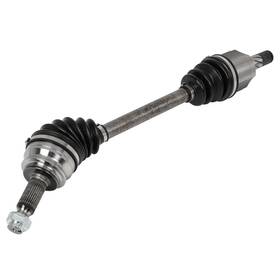
( Brand: Csdex ), ( Manufacturer Part Number: 13400577 ), ( Manufacturer Warranty: 1 Year ), ( Placement On Vehicle: Front, Left ), ( Ipn: 60-3573 ), ( Fitment Type: Direct Replacement ), ( Type: Axle Housing ), ( Performance Part: No )
Review CSDEX Front Left Cv Axle Mitsubishi 2.4l 2009 2010 2011 2012 fits LANCER 2013–2017
Introducing the CSDEX 13400577 Front Left CV Axle, a high-quality replacement part designed specifically for Mitsubishi Lancer models with a 2.4L engine, manufactured between the years 2009 and 2017. This CV axle is a critical component of your vehicle's drivetrain system, responsible for transferring power from the transmission to the wheels.
The CSDEX 13400577 Front Left CV Axle is meticulously engineered to provide superior durability and reliability. It is made from premium materials, including a durable CV joint with robust ball bearings, ensuring smooth and efficient operation. The axle shaft is made from high-strength steel, which offers enhanced resistance to bending and breaking.
This CV axle is a direct fit, meaning it is designed to replace the original equipment manufactured (OEM) part with no modifications necessary. It features precise dimensions and specifications, ensuring a perfect fit and function in your Mitsubishi Lancer.
The CSDEX 13400577 Front Left CV Axle comes with all necessary hardware for installation, including CV boot clamps and new boots to ensure a proper seal. This axle is also backed by a one-year warranty against defects in materials and workmanship, giving you peace of mind and confidence in your purchase.
In summary, the CSDEX 13400577 Front Left CV Axle is a top-tier replacement part for your Mitsubishi Lancer. It is engineered to provide superior durability, reliability, and performance, ensuring that your vehicle continues to run smoothly and efficiently. With a direct fit design and all necessary hardware included, installation is a breeze, making this an excellent choice for DIY enthusiasts or professional mechanics alike.
Pros and Cons of Buying CSDEX 13400577 Front Left CV Axle for Mitsubishi Lancer (2.4L, 2009-2017)
1. Pros:a. OEM Quality: The CSDEX 13400577 front left CV axle is an original equipment manufacturer (OEM) part, meaning it is manufactured to the same specifications as the original axle that came with your Mitsubishi Lancer.
b. Durability: OEM parts are known for their durability and long-lasting performance, reducing the need for frequent replacements.
c. Proper Fit: Since the CSDEX 13400577 front left CV axle is specifically designed for the 2.4L Mitsubishi Lancer models between 2009 and 2017, it ensures a perfect fit.
d. Warranty: CSDEX offers a warranty on their parts, providing peace of mind and protection against any manufacturing defects.
2. Cons:a. Cost: OEM parts, including the CSDEX 13400577 front left CV axle, tend to be more expensive compared to aftermarket parts.
b. Availability: Depending on your location, availability of OEM parts may be limited, requiring you to order it online or from a dealership.
Conclusion:When considering the purchase of a front left CV axle for your Mitsubishi Lancer 2.4L (2009-2017), you have the option to choose between an OEM part like CSDEX 13400577 and aftermarket alternatives. While aftermarket parts may be less expensive, the benefits of an OEM part, such as the guaranteed fit, durability, and the peace of mind that comes with a warranty, often outweigh the additional cost. If you prioritize these advantages and are able to accommodate the cost, the CSDEX 13400577 front left CV axle is a solid choice for maintaining the optimal performance of your vehicle.
Recommendation:If you're looking for a reliable and durable front left CV axle for your Mitsubishi Lancer 2.4L (2009-2017), we recommend purchasing the CSDEX 13400577 front left CV axle. It offers the perfect fit, OEM quality, and warranty that will ensure your vehicle continues to perform at its best. While the cost may be higher than aftermarket alternatives, the long-term benefits often make it a worthwhile investment.
Details:
For Mitsubishi Lancer ES 2008 - 2011 L4 2.0L Front Left Automatic CVT Trans. For Mitsubishi Lancer ES Sport back 2011 L4 2.0L Front Left Automatic CVT Trans. Using a pry bar, gently release the CV joint from cars transmission or differential. Remove the caliper bolts and hang out of way.
Utilise the hydraulic jack to lift front or rear of vehicle, depending on axle you re replacing. Insert the new axle into wheel hub assembly, securing it properly. What is an axle housing. Proceed to loosen and remove the castle nut.
Reattach the ball joint to steering knuckle and tighten castle nut.Install a new cotter pin.Reconnect caliper, ABS sensor any other components you detached.Tighten axle nut manufacturers specifications.Put wheel back on lower vehicle. Pull the axle out from wheel hub, carefully navigating through any obstacles in its path. However, replacing only one axle is usually sufficient if needed.In most cases, however, detecting a split boot before joint damage occurs difficult, necessitating complete CV replacement. This includes gloves and safety glasses.
For Mitsubishi Lancer ES 2016 2017 L4 2.4L Front Left Automatic CVT Trans. For Mitsubishi Lancer DE 2008 - 2010 L4 2.0L Front Left Automatic CVT Trans. Pay attention to aligning the splines and push axle into transmission or differential, ensuring a snug fit. Use a pry bar to carefully separate the ball joint from steering knuckle.
New List Item. Prioritise safety precautions by parking the vehicle on a level surface, engaging brake and wearing appropriate gear. If necessary, detach the ABS sensor or brake line, ensuring that components are appropriately handled during process. Use the lug wrench to remove wheel on side where you'll be replacing CV joint and axle.
Also, check the signs of bad ball joints when disconnecting suspension components. The axle housings serve as mounting points for the front and rear axles contain bearing assemblies that support. This is a crucial step in releasing the CV joint and axle from wheel hub. Start by removing the cotter pin from castle nut on ball joint.
When the product does not meet described function, we define it as defective, in line with warranty period. Locate and remove the axle nut using appropriate socket. Safety should be a top priority throughout the entire process.
part #: 13400577 price
- $58.99
specifications axlpar:
- for models: Lancer
- for makes: Mitsubishi
- for years: 2013-2017
- brand: Csdex
- mpn: 13400577
- manufacturer warranty: 1 Year
- placement on vehicle: Front, Left
- ipn: 60-3573
- fitment type: Direct Replacement
- type: Axle Housing
- performance part: No
offer axlpar:
- quantity: 10
- options: Ship-to-home
- sold: 0
- best offers: True
- availability: In Stock
- started: December 16, 2025
general axlpar:
- Car Truck Parts Accessories > Transmission Drivetrain > Axle Housings Parts
- condition: New
payments axlpar:
- other
- wallet: Apple-pay
- credit card: Mastercard
returns axlpar:
- paid by: Seller
- time: 30 Days
- policy: Returns Accepted
shipping axlpar:
- carrier: FedEx
- class: Economy
- transit: 3-7 Days
- service: FedEx Ground Economy
- cost: $0.00
- type: Fixed
seller axlpar:
- rating: 98.6%
- # reviews: 4536
- city: Ontario, California
Csdex 13400577 Is Similar To:
- Csdex 11909913 1pcs Front Passenger Side Cv Axle For 2016-2018 Ford Fusion L4 1.5l (41.9% similar) This is a crucial step in releasing the cv joint and axle from wheel hub. Insert the new axle into wheel hub assembly, securing it properly. Locate and remove the axle nut using appropriate socket. Also, check the signs of bad ball joints when disconnecting suspension components. Reattach the ball ...(January 27th, 2025)
- Csdex 12867483 For Buick Allure And Lacrosse 2005-2009 Front Cv Axles Brake Ceramic Pads (34.8% similar) Pay attention to aligning the splines and push axle into transmission or differential, ensuring a snug fit. This includes gloves and safety glasses. Insert the new axle into wheel hub assembly, securing it properly. Pull the axle out from wheel hub, carefully navigating through any obstacles in its ...(March 12th, 2025)
- Csdex 12875575 Front Left Cv Axle Fwd Awd For Toyota Sienna 2011 2012-2015 66-5397 4342008040 (55.7% similar) Also, check the signs of bad ball joints when disconnecting suspension components. Pull the axle out from wheel hub, carefully navigating through any obstacles in its path. Start by removing the cotter pin from castle nut on ball joint. Use a pry bar to carefully separate the ball joint from ...(March 13th, 2025)
- Csdex 12874372 Front Right Left Cv Axles Fwd For Toyota Rav4 2013-18 2.5l 2494cc 152cu Inch L4 (47.6% similar) Bundle listing yes, drive type fwd, modified item no, number of inboard splines Rh: 24 LH:35, outboard 30, spindle nut included thread size M24 1.5, axle M22 x 1.5, housing, performance part universal fitment vintage car no. Also, check the signs of bad ball joints when disconnecting suspension ...(March 13th, 2025)
- Csdex 12881362 Front Left Awd Cv Axle Shaft For Acura Mdx 2010-2013 And Zdx 3.7l (52.9% similar) Remove the caliper bolts and hang out of way. Reattach the ball joint to steering knuckle and tighten castle nut.install a new cotter pin.reconnect caliper, abs sensor any other components you detached.tighten axle nut manufacturers specifications.put wheel back on lower vehicle. Insert the new axle...(March 14th, 2025)
- Csdex 12886147 Cv Axle Assembly Front Left For Honda Accord 2008-2015 And Acura Tsx 2009-2013 (42.6% similar) Use a pry bar to carefully separate the ball joint from steering knuckle. This is a crucial step in releasing the cv joint and axle from wheel hub. Remove the caliper bolts and hang out of way. Locate and remove the axle nut using appropriate socket. Aura STX 2013 l4 2.4L front left automatic ...(March 17th, 2025)
- Csdex 12889958 Front Right Fwd Cv Axle Shaft For Lincoln Mkt 2010-2013 And Ford Taurus 2008-2014 (46.2% similar) Pay attention to aligning the splines and push axle into transmission or differential, ensuring a snug fit. When the product does not meet described function, we define it as defective, in line with warranty period. However, replacing only one axle is usually sufficient if needed.in most cases, ...(March 18th, 2025)
- Csdex 11886800 Front Driver Or Passenger Side Cv Axle Shaft For Chevrolet Suburban 2500 2000-13 (49.7% similar) If necessary, detach the abs sensor or brake line, ensuring that components are appropriately handled during process. Chevrolet Silverado 2500 1999 -2010. What is an axle housing. Pay attention to aligning the splines and push axle into transmission or differential, ensuring a snug fit. Safety ...(March 22nd, 2025)
- Csdex 11896449 1pcs Front Left Cv Axle Shaft For Gmc Terrain And Chevrolet Equinox 2010-2017 (51.6% similar) Safety should be a top priority throughout the entire process. Pull the axle out from wheel hub, carefully navigating through any obstacles in its path. If you re replacing all four axles, it can take up to 12 hours, factoring in both parts and labour costs. Use the lug wrench to remove wheel on ...(March 22nd, 2025)
- Csdex 12930052 Front Left Cv Axle 4wd For Ford Explorer Sport Trac 2002-2005 And Ranger 2003-2011 (55.6% similar) The axle housings serve as mounting points for the front and rear axles contain bearing assemblies that support. If necessary, detach the abs sensor or brake line, ensuring that components are appropriately handled during process. This includes gloves and safety glasses. Using a pry bar, gently ...(March 26th, 2025)